


C语言 错误处理方式
在C语言中, 代码发生错误一般会有两种处理方式:
-
终止程序
比如: 直接使用
assert()断言 或 直接崩溃 -
返回、设置错误码
C语言某些函数执行失败, 但是结果不足以导致致命问题时, 就会将错误码设置在
errno中. 用户可以通过strerr(errno)来获取错误信息
但是这些针对错误的处理方式, 不灵活. 严重的错误直接就是崩溃, 没有一点回转的余地
虽然程序出现问题大概率跟开发者有关, 不过还是灵活一些比较好
C++异常
异常概念
由于C语言中针对错误的处理不灵活, 所以C++引入了异常的概念
异常是什么?
异常是一种处理错误的方式, 当一个函数 发现自己无法处理的错误时 就可以抛出异常, 让函数的直接或间接的调用者处理这个错误
double division(int a, int b) { if (b == 0) // 当b == 0时抛出异常 throw "Division by zero condition!"; else return (double)a / (double)b;}
void func() { int len, time; cin >> len >> time; cout << division(len, time) << endl;}
int main() { try { func(); } catch (const char* errmsg) { cout << errmsg << endl; }
return 0;}这段代码就可以展现出最简单的 抛异常、捕捉异常、处理异常的场景
那么 这段代码执行会出现什么现象呢?
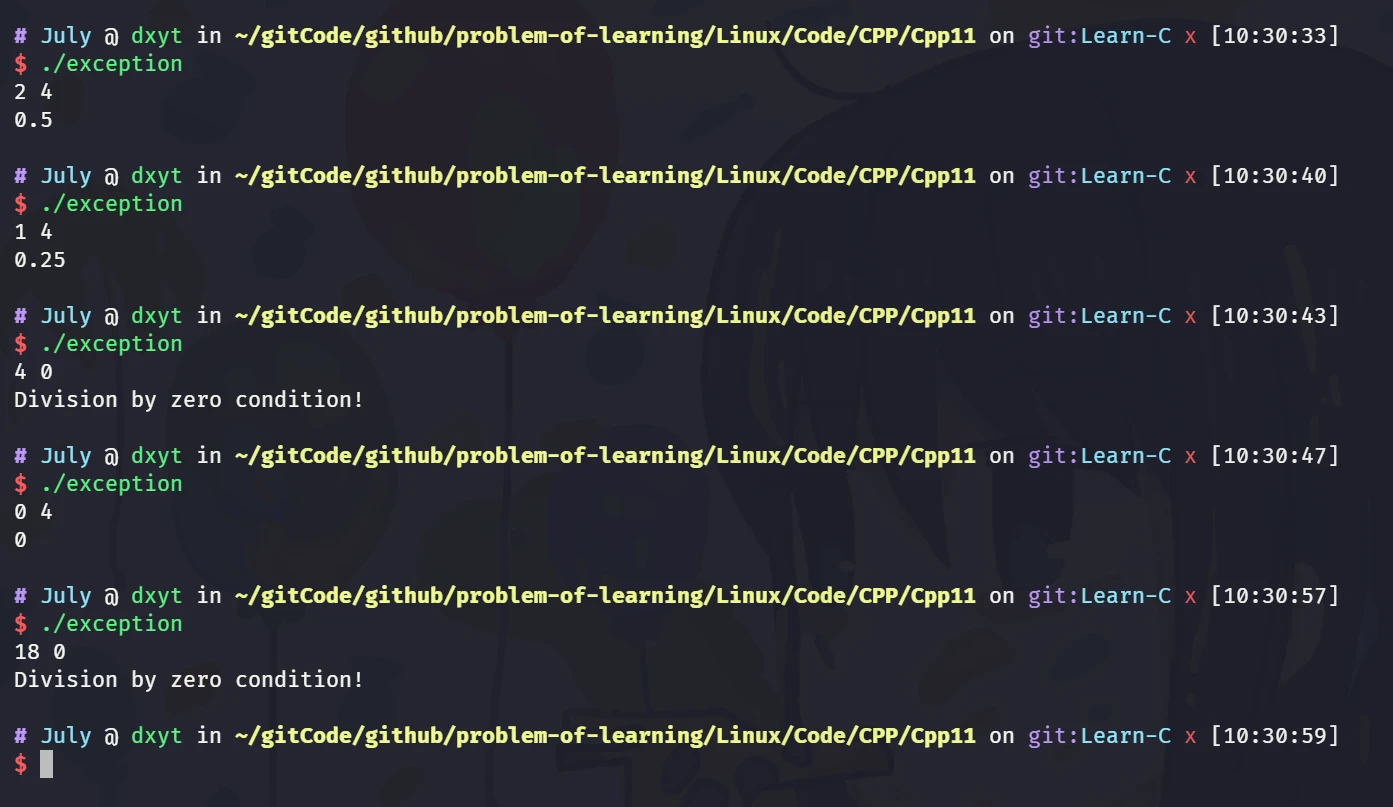
这段代码, 在main()的try作用域中调用了func()
执行代码后, 可以发现 当遇到除零错误时, 会打印字符串"Division by zero condition!", 且 没有返回错误退出信息
如果将func()从try中移除, 又会是什么结果呢?
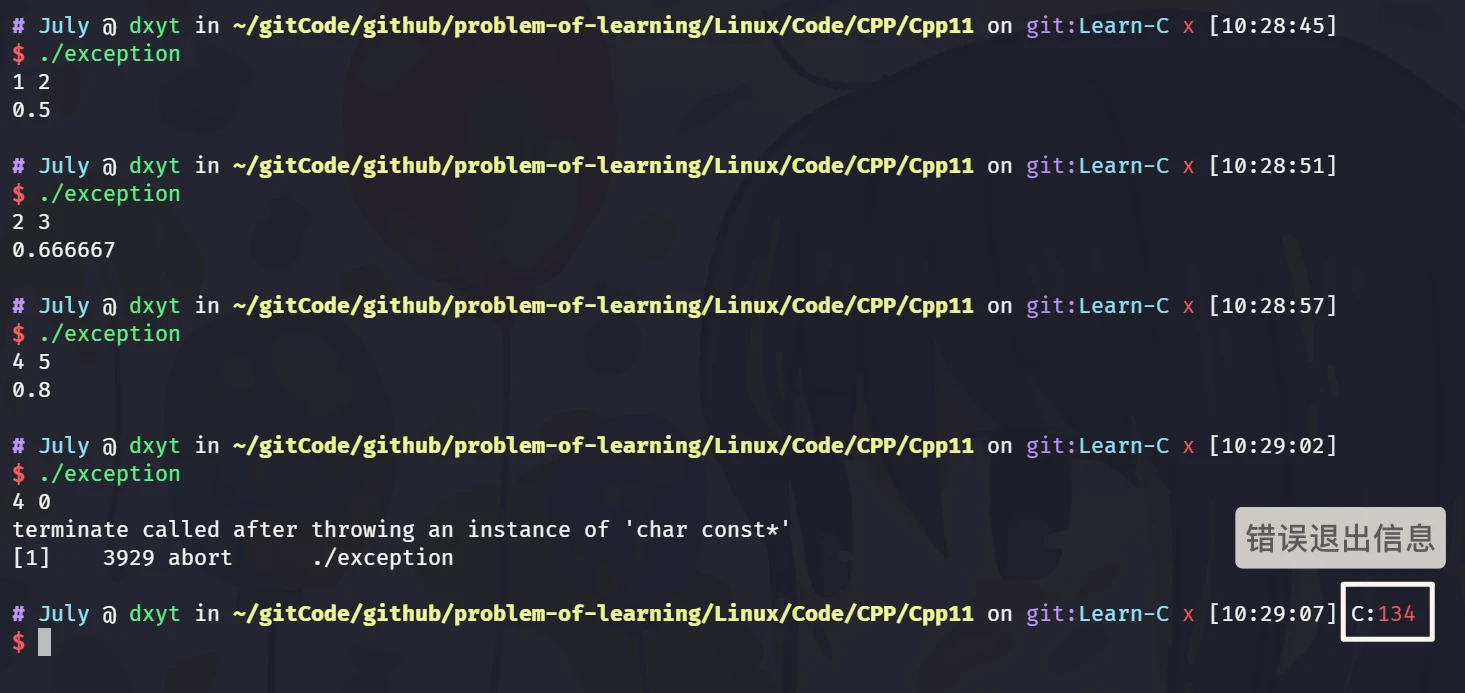
此时 发生除零错误, 进程会直接被abort终止, 退出信息为134
从这里可以看出, C++异常是如何处理的:
-
throwthrow是一个关键词, 用来抛出异常throw可以抛出任意类型上述例子中:
if(b == 0);throw "Division by zero condition!";就是在发生除零错误时, 抛出异常
"Division by zero condition!" -
trytry也是一个关键词, 一般来说 可能会抛出异常的代码, 都放在try块中放在
try块中的代码, 通常被成为保护代码在本例中:
func()在try中时, 可以捕获到异常并处理不在
try中时, 不会捕获异常 -
catchcatch同样是一个关键词, 是用来捕获throw抛出的异常的在本例中:
catch (const char* errmsg)捕获const char*类型的异常catch的异常类型 必须与throw的异常类型相同 否则无法捕获目标异常catch块中的代码, 为 捕获到异常后 要做的处理可以有多个
catch针对不同的异常进行捕获, 但是 多个catch中不能设置相同类型的异常即, 如果像这样设置
catch:try {}catch (const char* e){}catch (const char* e){}在一些编译器中会报错, 最少也是一个警告:
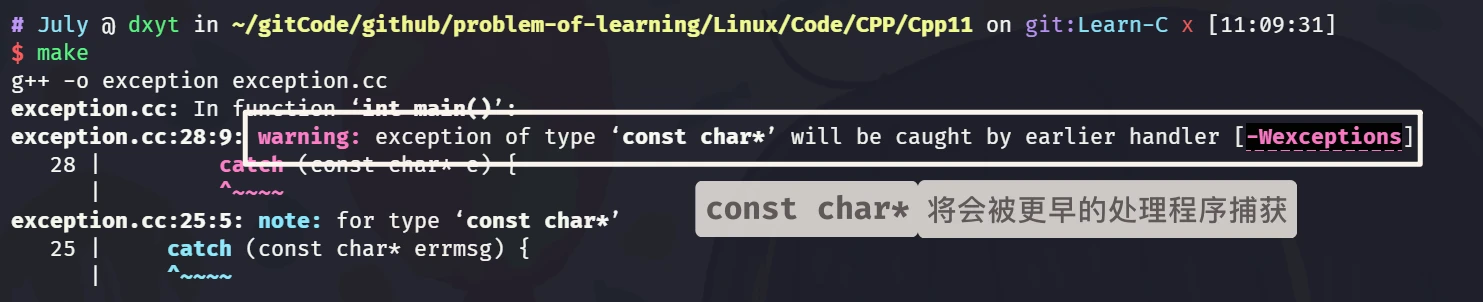
这就表示, 第二个
catch (const char* e)捕获不到const char*类型的异常
这就是C++异常处理的最基本的概念
异常的使用
异常的抛出 与 捕获 的匹配原则
-
异常是通过 抛出对象而引发的, 该对象的类型决定了应该激活哪个
catch的处理代码即,
catch的异常类型 必须与throw的异常类型相同, 否则无法捕获目标异常 -
被选中的处理代码是调用链中 与该对象类型匹配 且离抛出异常位置最近 的那一个
这句话是什么意思呢?
来分析这一段代码:
#include <iostream>using std::cout;using std::endl;using std::cin;double division(int a, int b) {// 当b == 0时抛出异常if (b == 0) {try {throw "Division by zero condition!";}catch (const char* errmsg) {cout << "Division 捕获了 const char* 异常: " << errmsg << endl;return 1;}}elsereturn ((double)a / (double)b);}void func() {int len, time;cin >> len >> time;try {cout << division(len, time) << endl;}catch (const int errI) {cout << "func 捕获了 const int 异常: " << errI << endl;}catch (const char* errS) {cout << "func 捕获了 const char* 异常: " << errS << endl;}}int main() {try {func();}catch (const char* errmsg) {cout << "main 捕获了 const char* 异常: " << errmsg << endl;}return 0;}这段代码,
main()中catch(const char*),func()中catch(const cahr*),division()中也catch(const char*)如果发生除零错误, 会触发哪个
catch捕获异常呢?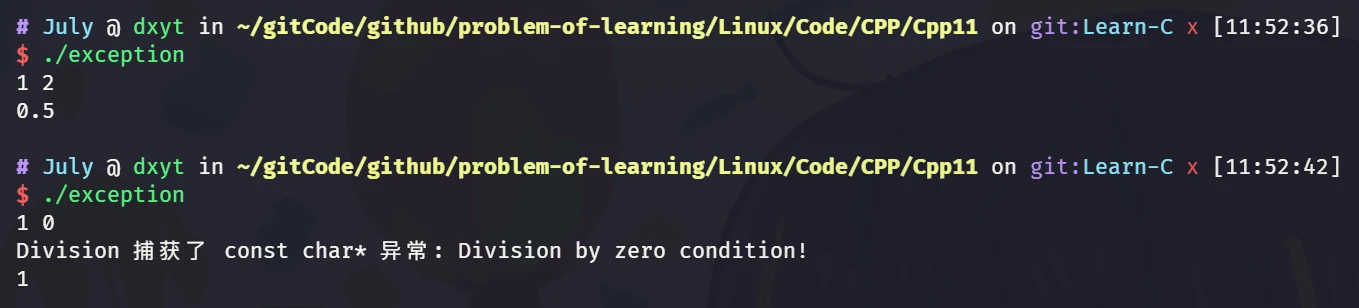
很明显,
division()内部的catch (const char* errmsg)会捕捉到因为, 捕捉异常类型与抛出异常类型匹配 且离抛出异常位置最近
如果,将
division()内部的catch (const char* errmsg)改为catch (const int errI), 则会被func()中的catch捕捉到呢?
没错, 就是
func()内部的catch (const char* errS) -
throw抛出异常时, 编译器会生成一个 异常对象的临时拷贝, 类似函数返回, 所以可以正常的被更外层的函数栈捕捉到 -
使用
catch(...)可以 捕获任意类型的异常也就是说, 使用
catch(...)之后, 只要 有异常在此之前没有被捕获, 就会捕获此异常比如可以用这段代码来实验一下:
#include <iostream>using std::cout;using std::endl;using std::cin;class Exc1 {private:int _excID;};class Exc2 {private:int _excID;};double division(int a, int b) {// 当b == 0时抛出异常if (b == 0) {throw "Division by zero condition!";}else if (b == 1) {throw 1024;}else if (b == 2) {throw 'b';}else if (b == 3) {throw Exc1();}else if (b < 0) {throw Exc2();}elsereturn ((double)a / (double)b);}void func() {int len, time;cin >> len >> time;try {cout << division(len, time) << endl;}catch (const int errI) { // 捕获const整型异常cout << "func 捕获了 const int 异常: " << errI << endl;}catch (const char errC) { // 捕获const字符异常cout << "func 捕获了 const char 异常: " << errC << endl;}}int main() {while(true) {try {func();}catch (const char* errmsg) { // 捕获const字符串异常cout << "main 捕获了 const char* 异常: " << errmsg << endl;}catch (...) {cout << "main 捕获了 未知异常" << endl;}}return 0;}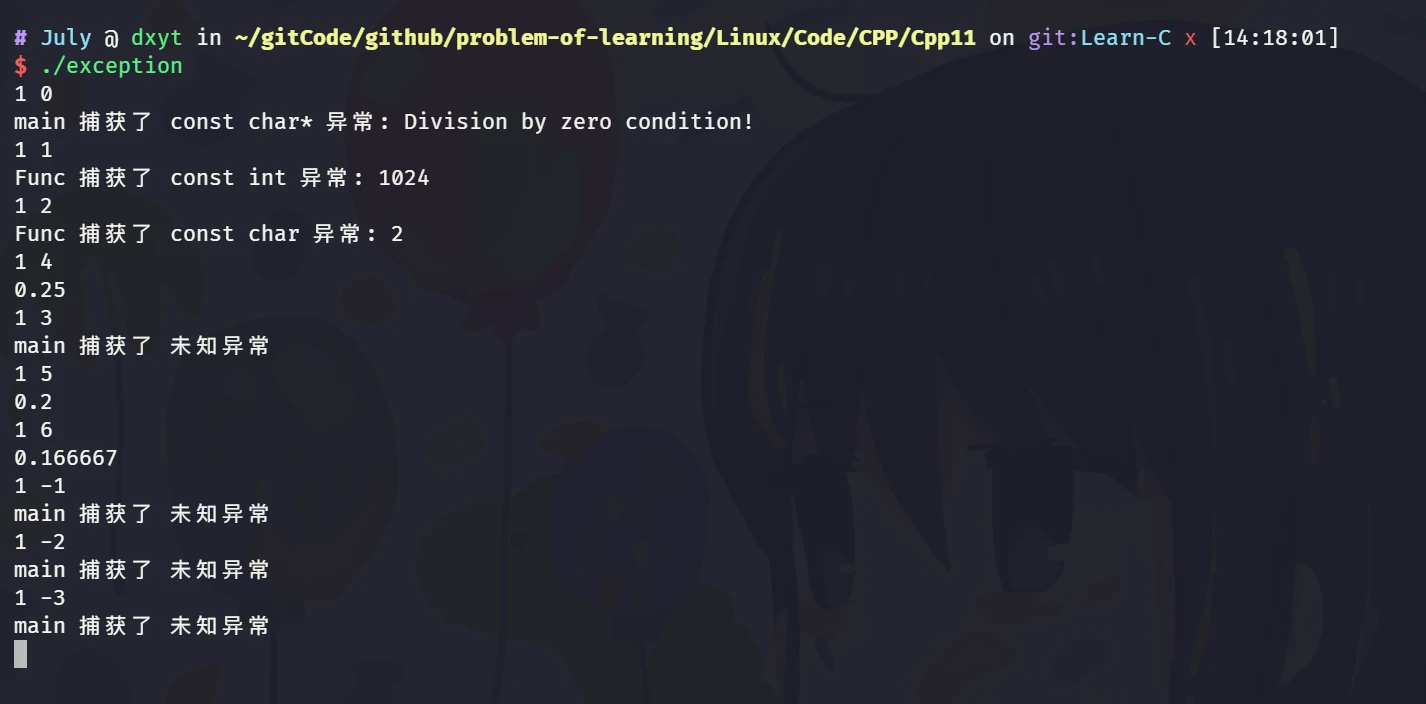
const char*、const int、const char这三种类型的异常, 分别在main()和func()中指定捕获了在传入的
b == 3和b < 0时, 抛出的Exc1对象和Exc2对象异常 并没有指定捕获但是, 他们却执行了
cout << "main 捕获了 未知异常" << endl;这个语句即, 执行了
catch(...)内的处理这可以说明,
catch(...)可以捕获任意类型的异常但, 由于
catch(...)没有指定类型, 所以 无法了解捕捉到的究竟是什么类型的异常 -
虽说
catch的异常类型 必须与throw的异常类型相同, 否则无法捕获目标异常但实际上, 那只是一般情况下
除此之外, 还存在一个特例:
如果
catch捕捉基类异常, 那么 除了可以捕捉到throw抛出的 此基类异常外, 还可以捕捉到throw抛出的 此基类的派生类异常即,
catch可以捕获目标类型的子类型异常比如这段代码:
#include <iostream>using std::cin;using std::cout;using std::endl;class faClass {private:size_t _faExcID;};class sonClass: public faClass {private:size_t _sonExcID;};double division(int a, int b) {// 当b == 0时抛出异常if (b == 0) {throw "Division by zero condition!";}else if (b == 1) {throw faClass();}else if (b < 0) {throw sonClass();}elsereturn ((double)a / (double)b);}void func() {int len, time;cin >> len >> time;cout << division(len, time) << endl;}int main() {while (true) {try {func();}catch (const char* errmsg) {cout << errmsg << endl;}catch (const faClass& e) {cout << "main 捕获到faClass类异常 或 以faClass为基类的派生类异常" << endl;}}return 0;}这段代码:
-
b传入0,throw "Division by zero condition!" -
b传入1,throw faClass() -
b传入负数,throw sonClass()sonClass是faClass的派生类
而除了
catch(const char* errmsg)之外, 只catch(const faClass& e)那么, 这段代码发生各种异常的结果是什么?
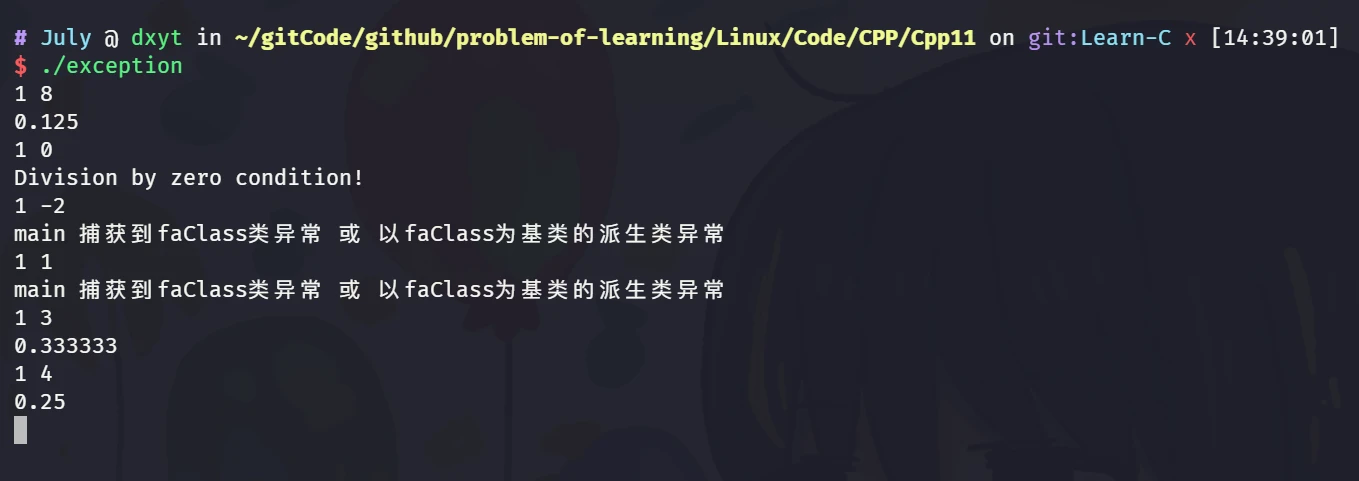
可以看到, 当
b传入负数或1时, 都会执行catch (const faClass& e)内的处理动作这其实就证明了, 如果
catch捕捉基类异常, 那么 除了可以捕捉到throw抛出的 此基类异常外, 还可以捕捉到throw抛出的 此基类的派生类异常 -
在函数调用链中 异常栈展开匹配原则
-
首先检查
throw本身是否在try块内部如果是, 则在当前函数栈帧 查找匹配的
catch语句如果当前函数栈帧有匹配的, 则 跳到
catch的地方进行处理 -
如果当前函数栈帧内没有匹配的, 则 退出当前函数栈, 继续在外层调用函数的栈中进行查找匹配的
catch此操作, 会一直退出到
main()函数栈帧中 -
如果到达
main函数的栈, 依旧没有匹配的catch, 则 终止进程 -
整个沿着调用链 向更外层调用函数的栈帧中查找匹配的
catch的行为, 被称为 栈展开 -
为了避免 由于异常没有匹配的
catch导致进程终止, 所以 一般使用异常时 都会在最后 使用catch(...)捕获未知异常 -
找到匹配的
catch子句并处理以后, 会继续沿着catch子句后面继续执行
此原则中, 前三条原则 即为栈展开的过程.
假如存在func1()、func2()、func3():
void func3() { throw "Throw an exception directly!"; cout << "hello func3" << endl;}
void func2() { func3(); cout << "hello func2" << endl;}
void func1() { func2(); cout << "hello func1" << endl;}且,main()函数呢存在以下内容:
int main() { try { func1(); } catch (const char* errmsg) { cout << errmsg << endl; } cout << "hello main" << endl;
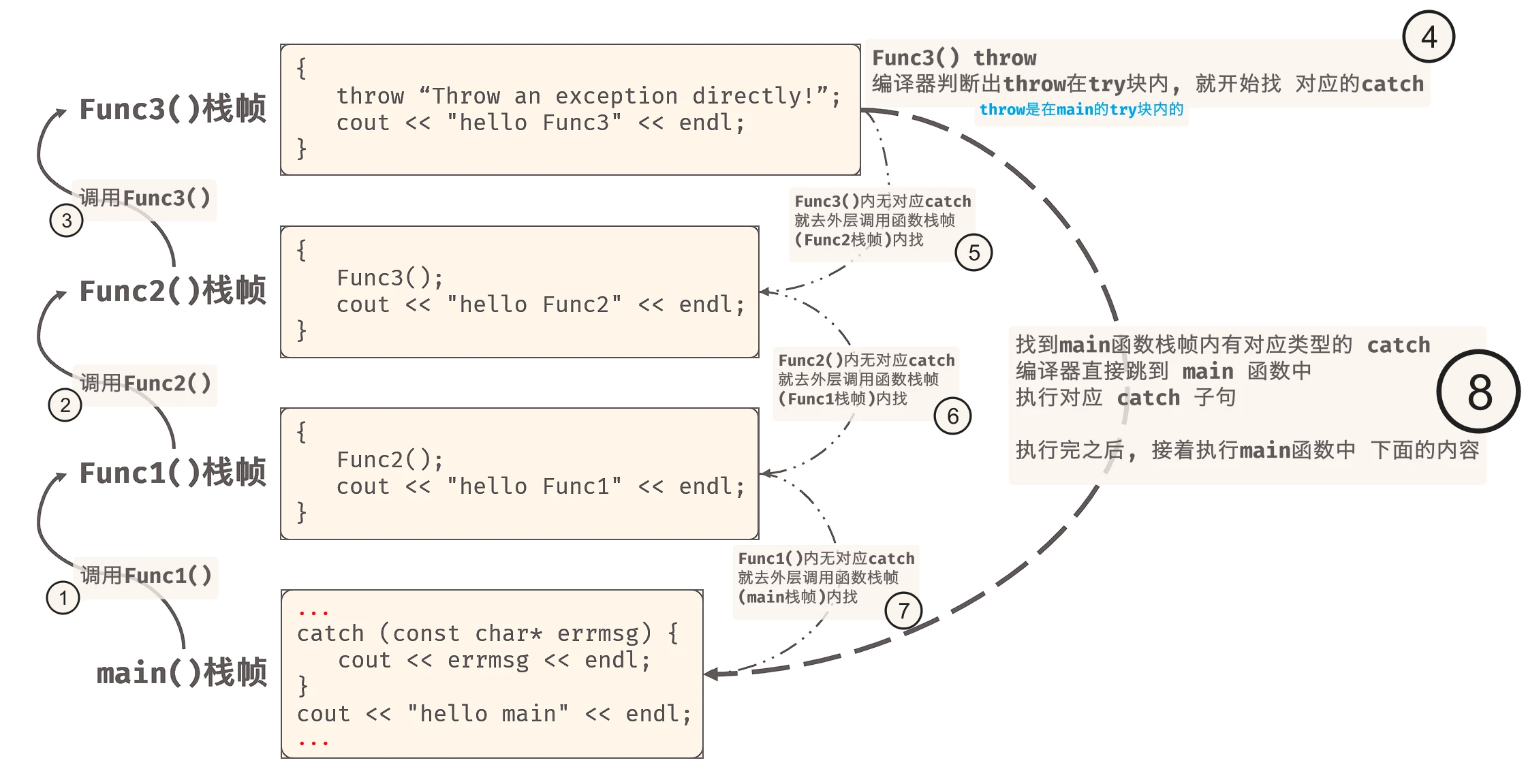
return 0;}那么,throw异常之后, 栈展开的过程大概为这样的:
C++异常处理有一个非常麻烦的点, 但不是异常麻烦, 本身麻烦, 而是需要特别注意内存管理
throw之后, 如果找到对应类型的catch, 会直接跳转到对应函数栈帧内执行catch子句, 执行完之后 会留在catch到异常的函数内继续向下执行, 而不是回到throw的位置继续执行

func1()、func2()、func3()中, 都有一句cout语句, 但是, 只执行了main()中的cout语句
这是很正常的逻辑, 但 很可能会造成什么后果呢? 可以看一看这段代码:
#include <iostream>
using std::cout;using std::endl;
void func1() { // new一块空间 int* arr = new int[20480];
throw "Throw an exception directly!"; cout << "hello func1" << endl;
delete[] arr;}
int main() { while (true) { try { func1(); } catch (const char* errmsg) { cout << errmsg << endl; } cout << "hello main" << endl; }
return 0;}这段代码执行之后, 会发生什么后果?
没错, 内存泄漏! 非常严重的内存泄漏!
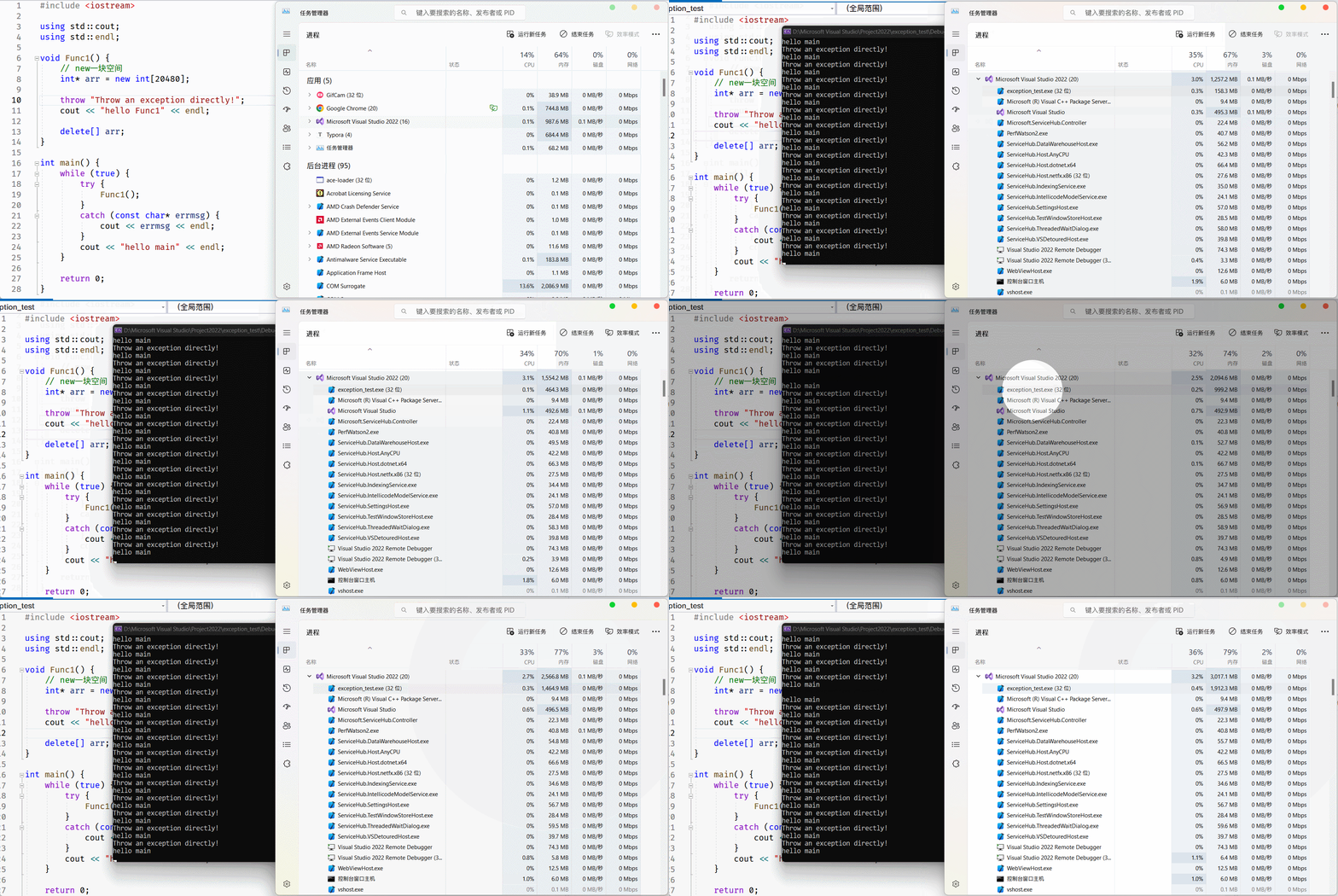
可以看到, 名为exception_test.exe的内存占用, 在疯狂的上涨
这是什么原因呢?
其实是因为, new int[20480]出来的空间, 没有被delete[]掉
但是func1()函数中, new[]之后 函数结束前 明明delete[]了, 为什么没有delete[]掉呢?
就是因为func1()函数内throw之后, 直接跳到了main()中catch的位置, 并且留在了main()中没有回到throw那里
所以 在throw之后的 delete[]语句根本就没有执行
当前阶段, 如何正确的解决这个问题呢?
如果存在new之后会throw的可能, 就需要直接在func1()内 将throw放在try块内, 就地catch处理并返回:
void func1() { // new一块空间 int* arr = new int[20480];
try { throw "Throw an exception directly!"; } catch (const char* errmsg) { cout << errmsg << endl; delete[] arr; return; }
// 这里也要delete[] // 因为在其他场景中, 可能并不一定会throw delete[] arr;}这样, 就不会发生内存泄漏了:
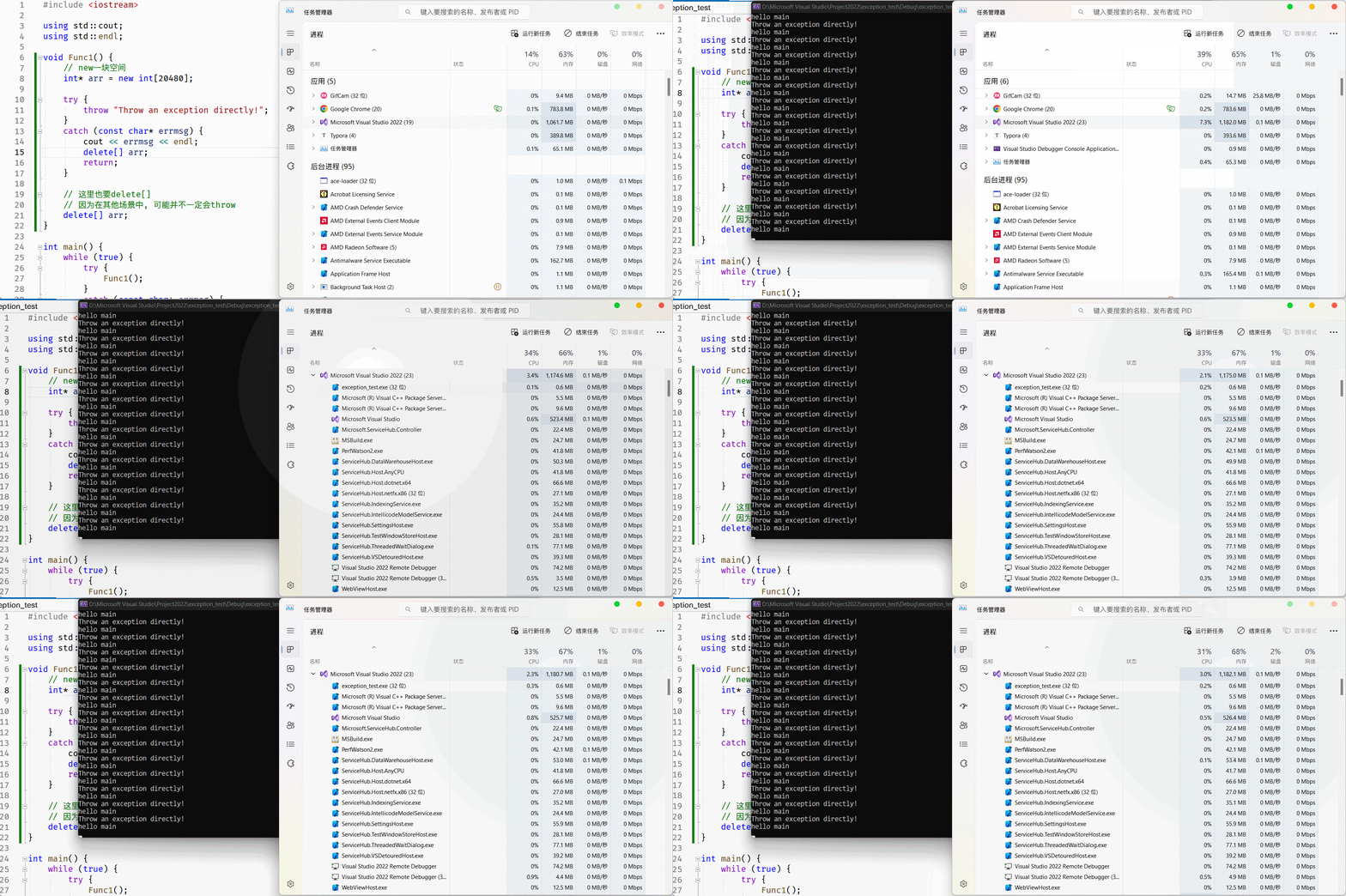
这是当前阶段最简单的处理方式, 也比较安全
异常的重新抛出
观察这段代码:
double division(int a, int b) { // 当b == 0时抛出异常 if (b == 0) { throw "Division by zero condition!"; } return (double)a / (double)b;}
void func() { int* array = new int[10];
try { int len, time; cin >> len >> time; cout << division(len, time) << endl; } catch (...) { cout << "delete []" << array << endl; delete[] array; throw; }
cout << "delete []" << array << endl; delete[] array;}
int main() { try { func(); } catch (const char* errmsg) { cout << errmsg << endl; }
return 0;}func()中new了一个数组. 但是在delete[]之前又有可能throw异常
此异常的处理动作, 已经在main()函数中实现了
但是, 由于还有new出来的空间未delete, 又不得不在func()函数内添加一个try{...}catch{...}
不过, 这里的捕获异常 可以使用catch(...)捕获任意异常, 并且不处理异常, 只将未释放的空间delete掉, 然后 使用throw;再将异常重新抛出
抛出之后, 会再沿着调用链进行栈展开寻找对应的catch, 找到真正处理此异常的catch再处理掉异常
上面例子中, func()的catch(...)子句中的throw;即为重新抛出异常
C++重新抛出异常的语法是throw 目标异常
由于这里使用的是
catch(...)没有指定类型捕获, 所以throw;就可以重新抛出如果指定了类型
catch(const char* errmsg), 就需要throw errmsg;来实现重新抛出
异常安全
关于异常的使用, 有一些情况下需要非常的小心:
-
构造函数的作用是 完成对象的构造和初始化, 最好不要在构造函数中抛出异常, 否则可能导致对象不完整或没有完全初始化
-
析构函数的作用是 完成资源的清理, 最好不要在析构函数内抛出异常, 否则可能导致资源泄漏(内存泄漏、句柄未关闭等)
-
还有就是, 在
new和delete中抛出了异常, 导致 内存泄漏在
lock和unlock之间抛出了异常 导致死锁这些问题的更好解决方法其实是智能指针
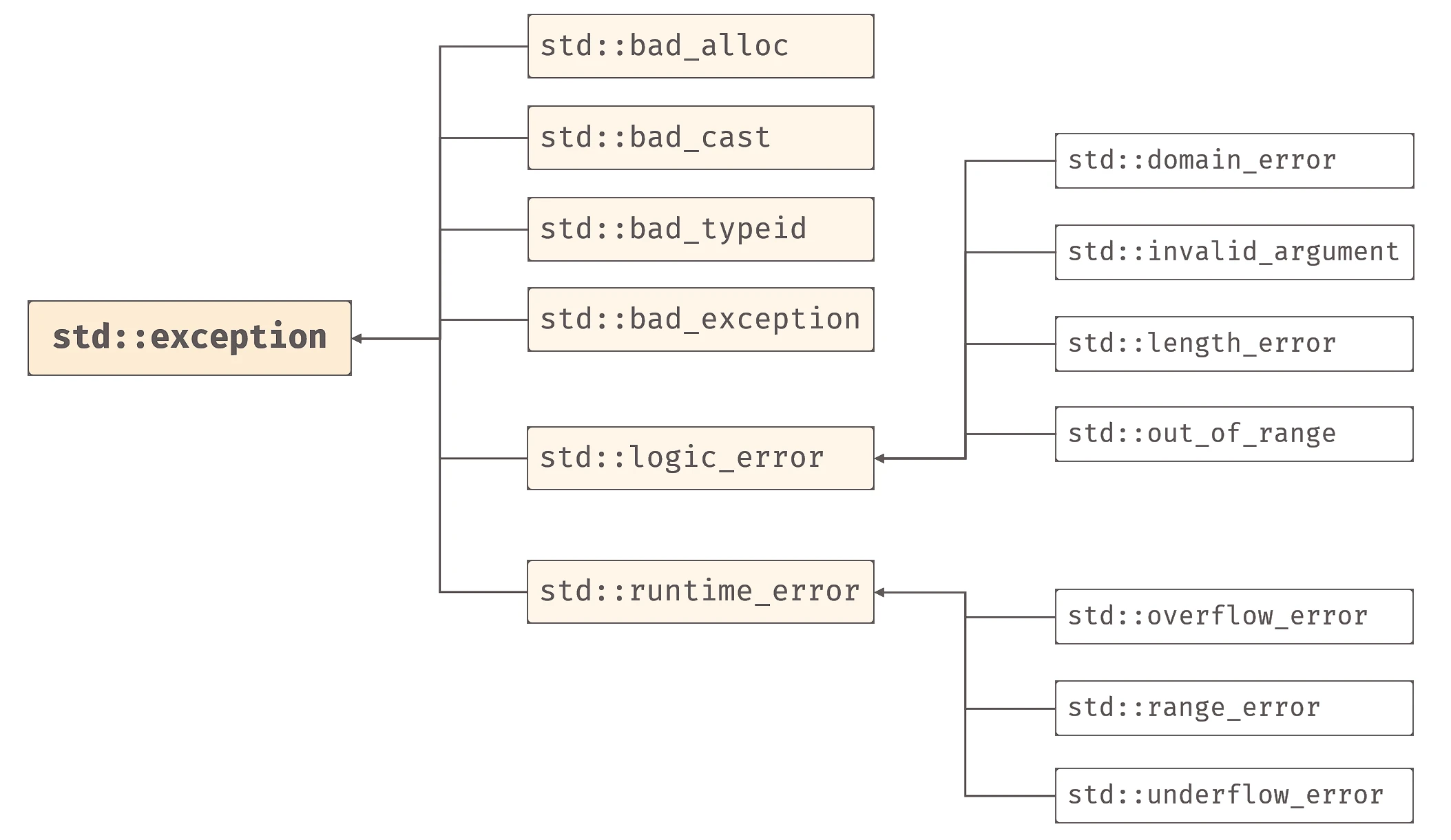
C++标准库的异常体系
上面介绍过: 如果catch捕捉基类异常, 那么 除了可以捕捉到此基类异常外, 还可以捕捉到此基类的派生类异常
所以, C++标准就根据此原则, 实现了一个 异常类体系
即 C++标准中 实现了许多的类 来对应C++可能发生的所有错误, 被称为 异常类
这些异常类, 都派生于一个基类std::exception
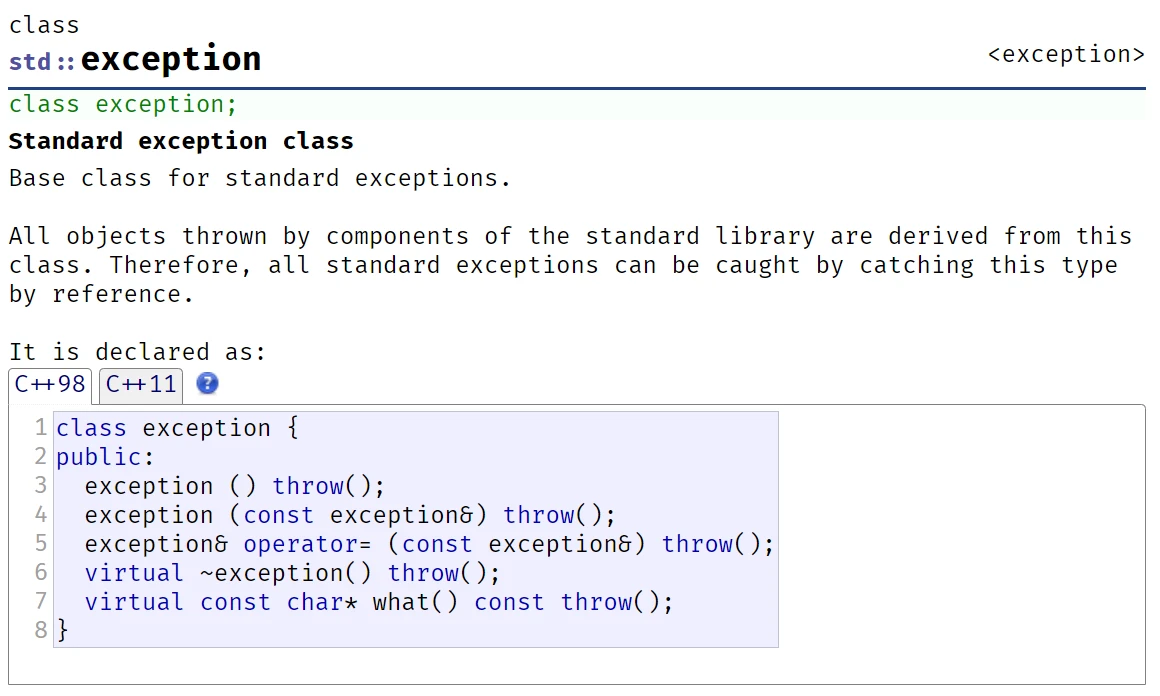
文档中对此类的描述是:
标准库中所有组件抛出的异常对象都派生于此类, 因此, 通过捕获此类, 就可以捕获所有标准异常
此类中, 除了构造、析构等成员函数之外, 还实现了一个共其派生类重写的成员函数what()
what()
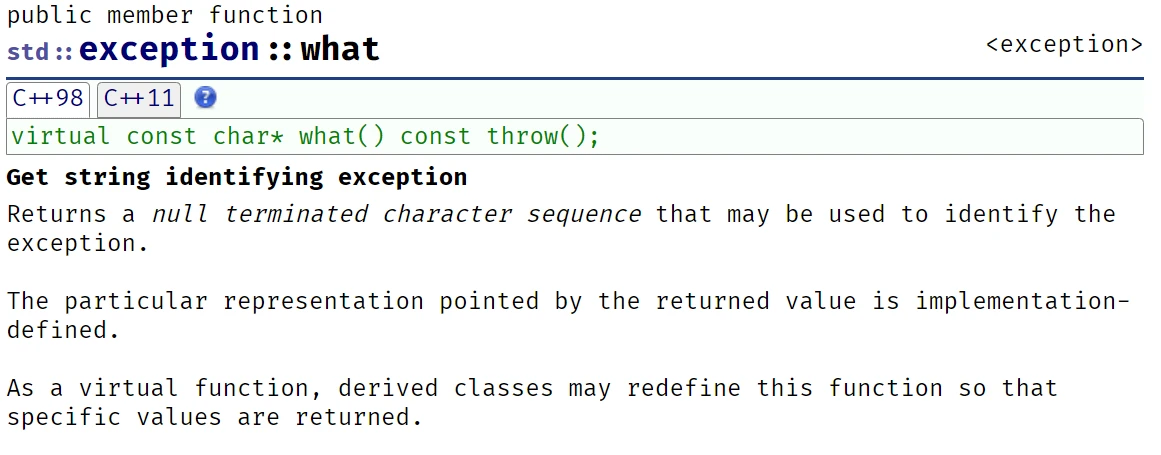
what() 有什么用呢?
由于标准异常有很多, 而且都可以通过捕获std::exception来捕获
所以, 捕获到之后要分辨 捕获到的究竟是什么异常是很麻烦的
所以, std::exception提供了what()函数. 它需要实现的作用是: 获取标识异常的字符串
设置成虚函数, 就是为了让派生类重写此函数, 实现不同派生类可以 返回标识其本身的字符串
也就是说, 通过捕获std::exception捕获到异常对象之后, 可以调用其成员函数what()并接收其返回值, 进而判断捕获到的是什么异常
C++标准库中的异常类
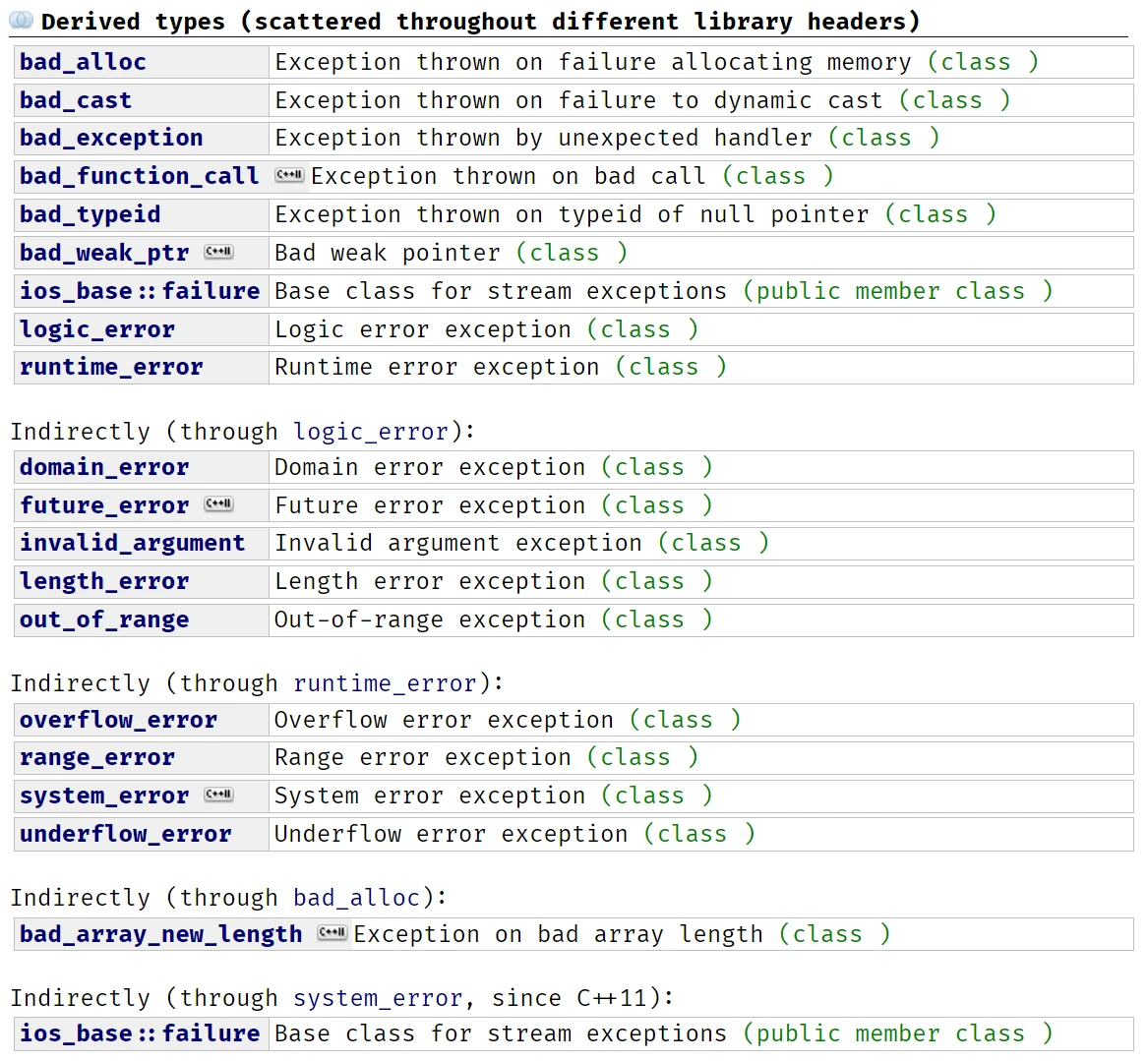
C++标准库中, 实现了许多的异常类.
-
bad_alloc分配内存失败时, 抛出的异常
-
bad_cast动态转换时, 抛出的异常
-
out_of_range越界访问时, 抛出的异常
-
…
这张图, 可以用来表示 C++标准库中的异常类体系:
自定义异常体系
实际的项目开发中, 许多的公司都会自己定义一套异常体系 来进行规范的异常管理
这里有一个 自定义异常体系的例子:
#include <iostream>#include <string>#include <unistd.h>
using std::string;using std::cout;using std::endl;
class Exception {public: Exception(const string& errmsg, int id) : _errmsg(errmsg) , _id(id) {}
virtual string what() const { return _errmsg; }
protected: string _errmsg; int _id;};
class SqlException : public Exception {public: SqlException(const string& errmsg, int id, const string& sql) : Exception(errmsg, id) , _sql(sql) {}
virtual string what() const { string str = "SqlException:"; str += _errmsg; str += "->"; str += _sql;
return str; }
private: const string _sql;};
class CacheException : public Exception {public: CacheException(const string& errmsg, int id) : Exception(errmsg, id) {}
virtual string what() const { string str = "CacheException:"; str += _errmsg;
return str; }};
class HttpServerException : public Exception {public: HttpServerException(const string& errmsg, int id, const string& type) : Exception(errmsg, id) , _type(type) {}
virtual string what() const { string str = "HttpServerException:"; str += _type; str += ":"; str += _errmsg;
return str; }
private: const string _type;};
void SQLMgr() { if (rand() % 7 == 0) { throw SqlException("权限不足", 100, "select * from name = '张三'"); } else { cout << "Sql Success" << endl; }}
void CacheMgr() { if (rand() % 5 == 0) { throw CacheException("权限不足", 101); } else if (rand() % 6 == 0) { throw CacheException("数据不存在", 102); } else { cout << "Cache Success" << endl; }
SQLMgr();}
void HttpServer() { if (rand() % 3 == 0) { throw HttpServerException("资源请求错误", 103, "get"); } else if (rand() % 4 == 0) { throw HttpServerException("权限不足", 104, "post"); } else { cout << "Http Success" << endl; }
CacheMgr();}
int main() { srand(time(0)); while (true) { // 此代码中 唯一一个不能跨平台的函数sleep(), 这里用的是 Linux环境 // Windows 平台 需要将其换为 Sleep(1000); // 并将 头文件 unistd.h 换为 Windows.h sleep(1); try { HttpServer(); } catch (const Exception& e) { // 多态 cout << e.what() << endl; } catch (...) { cout << "Unkown Exception" << endl; } }
return 0;}我们先分析一下这段代码:
-
首先, 代码实现了 4 个类: 1个基类, 3个派生类
-
基类
Exception成员变量:
_errmsg,string类型 用于存储异常信息;_id,int类型 用于存储异常代码成员函数:
what(), 返回异常信息, 用于获取当前异常类 -
派生类1
SqlException成员变量: 除继承于基类的
_errmsg和_id之外;_sql,const string类型 用于存储 异常sql指令成员函数: 重写
what(), 返回异常信息, 包括所属类、_errmsg和_sql -
派生类2
CacheException成员变量: 除继承于基类的
_errmsg和_id之外, 无其他成员变量成员函数: 重写
what(), 返回异常信息, 包括所属类和_errmsg -
派生类3
HttpServerException成员变量: 除继承于基类的
_errmsg和_id之外;_type,const string类型 用于存储 发生异常的服务类型成员函数: 重写
what(), 返回异常信息, 包括所属类、type和_errmsg
-
-
其次, 实现了三个函数 用来模拟不同的服务的异常场景
-
SqlMgr():模拟数据库管理时的异常场景:
随机数 % 7 == 0执行throw SqlException, 模拟数据库管理时权限不足的场景异常信息:
权限不足, 异常代码:100, 异常Sql语句:select * from name = '张三' -
CacheMgr():模拟缓存管理时的异常场景:
随机数 % 5 == 0执行throw CacheException("权限不足", 100)异常信息:
权限不足, 异常代码:101随机数 % 6 == 0执行throw CacheException("数据不存在", 101)异常信息:
数据不存在, 异常代码:102最后, 调用
SqlMgr() -
HttpServer():模拟HTTP服务可能发生的异常场景:
随机数 % 3 == 0执行HttpServerException("请求资源不存在", 200, "get")异常信息:
资源请求错误, 异常代码:103, 异常服务类型:get随机数 % 4 == 0执行HttpServerException("权限不足", 100, "post")异常信息:
权限不足, 异常代码:104, 异常服务类型:post最后, 调用
CacheMgr()
-
-
最后, 主函数内 死循环模拟服务器运行
try块内调用HttpServer(), 而HttpServer()内调用CacheMgr(),CacheMgr()内调用SqlMgr(), 模拟服务运行的流程catch (const Exception& e)及代码块实际作用是 捕获三种异常类, 并多态调用不同异常类对象的what()接受打印相关异常信息catch (...)及代码块捕获其他异常, 输出未知异常
至此, 整个代码分析结束, 从HttpServer() 层层调用到 SqlMgr(), 每个函数内都有概率抛出不同的异常, 抛出之后会在 main内被捕获并处理
查看执行结果:
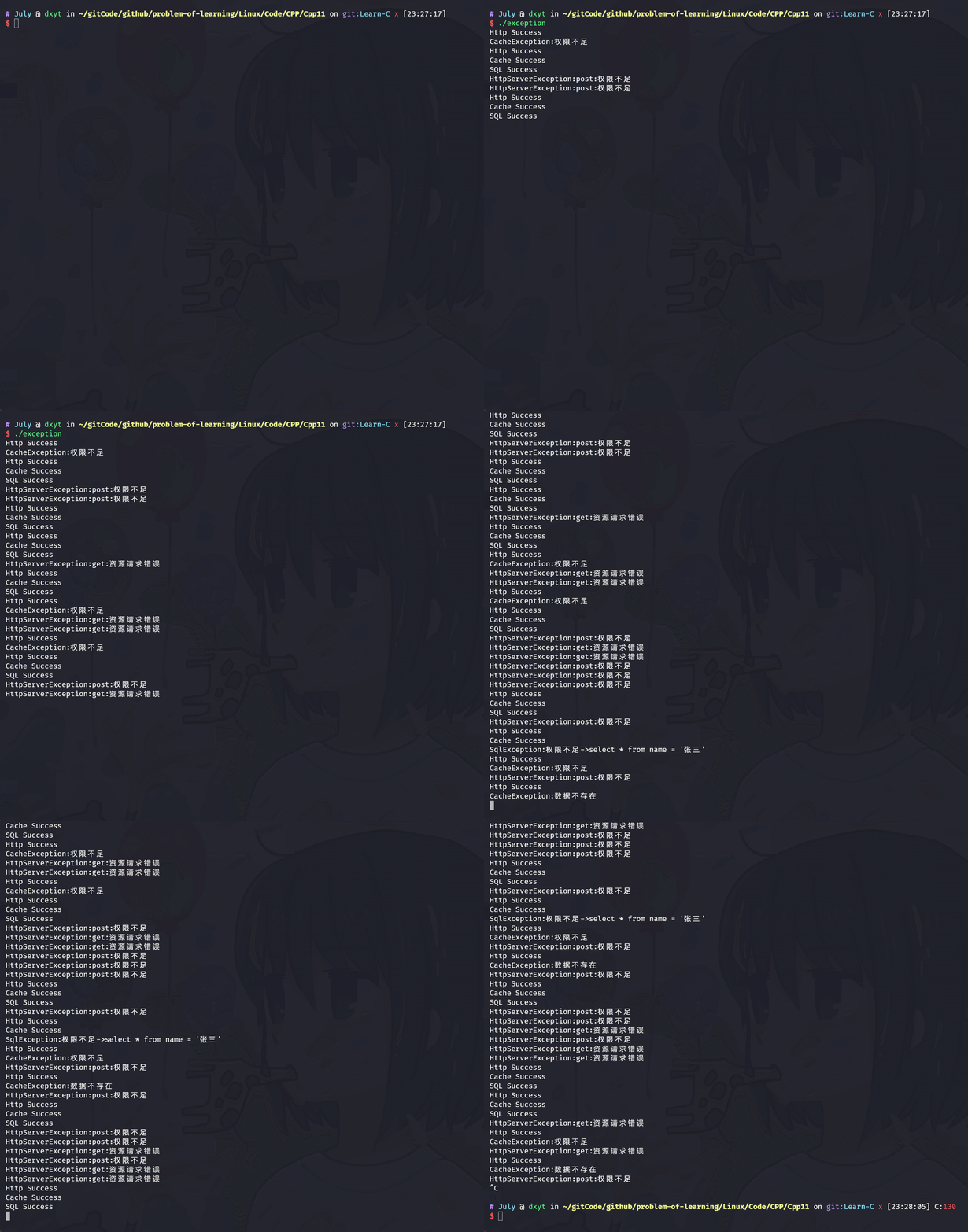
从结果可以看到, 每次循环 每层调用都有一定的概率抛异常
并且都会在main函数内被捕捉到并处理
图中, 光标可能在某行停顿1-2s, 说明此时并没有异常抛出
在添加一个SeedMsg()函数, 模拟发送信息异常
void SeedMsg(const string& str) { if (rand() % 2 == 0) { throw HttpServerException("SeedMsg::网络错误", 105, "put"); } else if (rand() % 4 == 0) { throw HttpServerException("SeedMsg::你已经不是对方好友", 106, "post"); } else { cout << "消息发送成功!->" << str << endl; }}将main()函数try块中执行的函数 换为此函数, 查看执行:
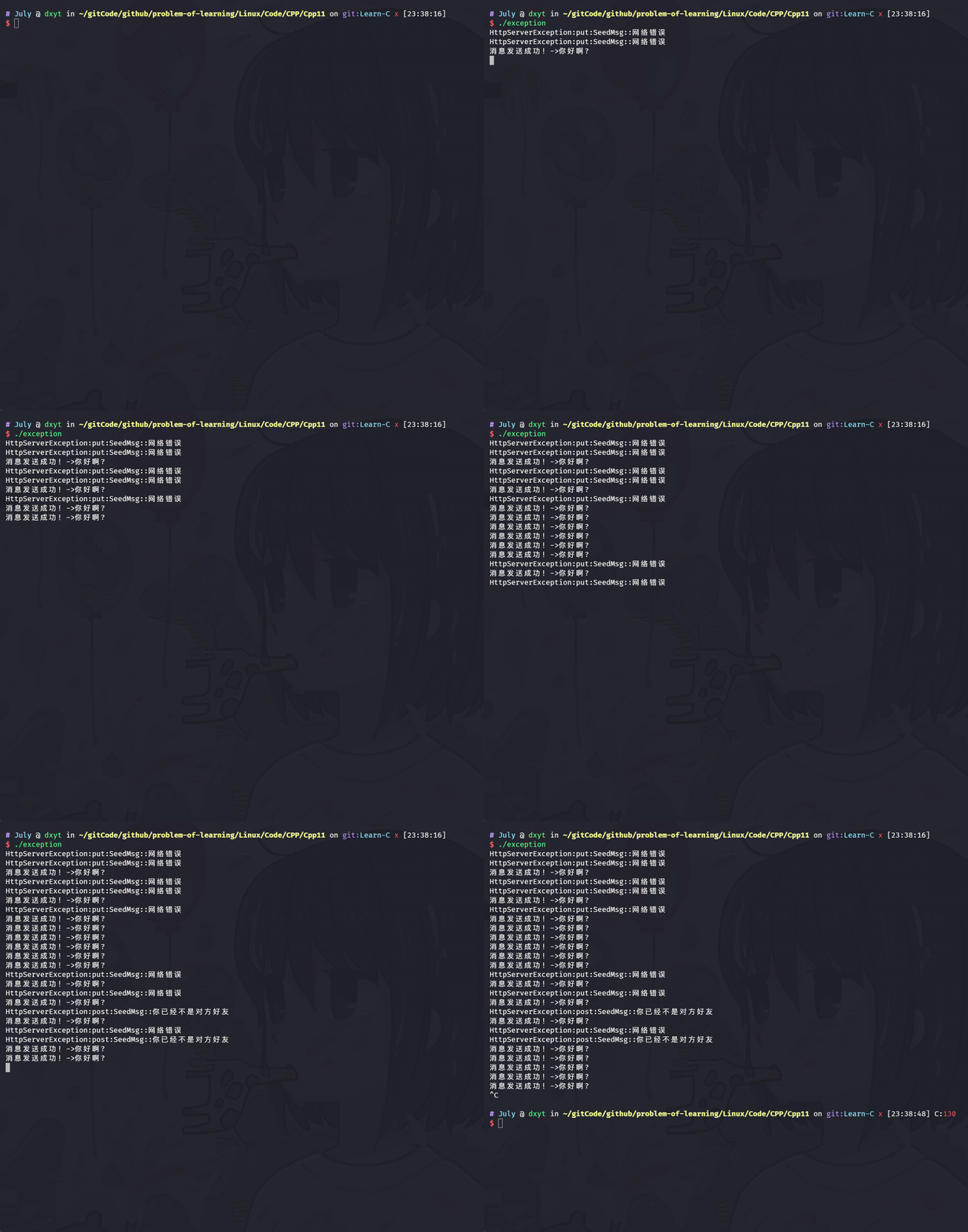
并尝试, 将 网络错误异常的处理方式 改为 发生异常之后 直接重试再发送10次
其实很简单, 只需要改动main函数内容就可以(不过要先在 Exception类中添加一个成员函数getid()):
int main() { srand(time(0)); while (true) { // 此代码中 唯一一个不能跨平台的函数sleep(), 这里用的是 Linux环境 // Windows 平台 需要将其换为 Sleep(1000); // 并将 头文件 unistd.h 换为 Windows.h sleep(1); try { for(int i = 1; i <= 10; i++) { try { SeedMsg("你好啊?"); // 能走到这里 一定发送成功 // 直接break跳出 for循环 break; } catch (const Exception& e) { if (e.getid() == 105) { // 针对 103 异常处理 cout << "网络错误, 重发送, 第 " << i << " 次" << endl; continue; } else { // 不是此异常, 重新抛出 throw e; } } } } catch (const Exception& e) { // 多态 cout << e.what() << endl; } catch (...) { cout << "Unkown Exception" << endl; } }
return 0;}执行结果:
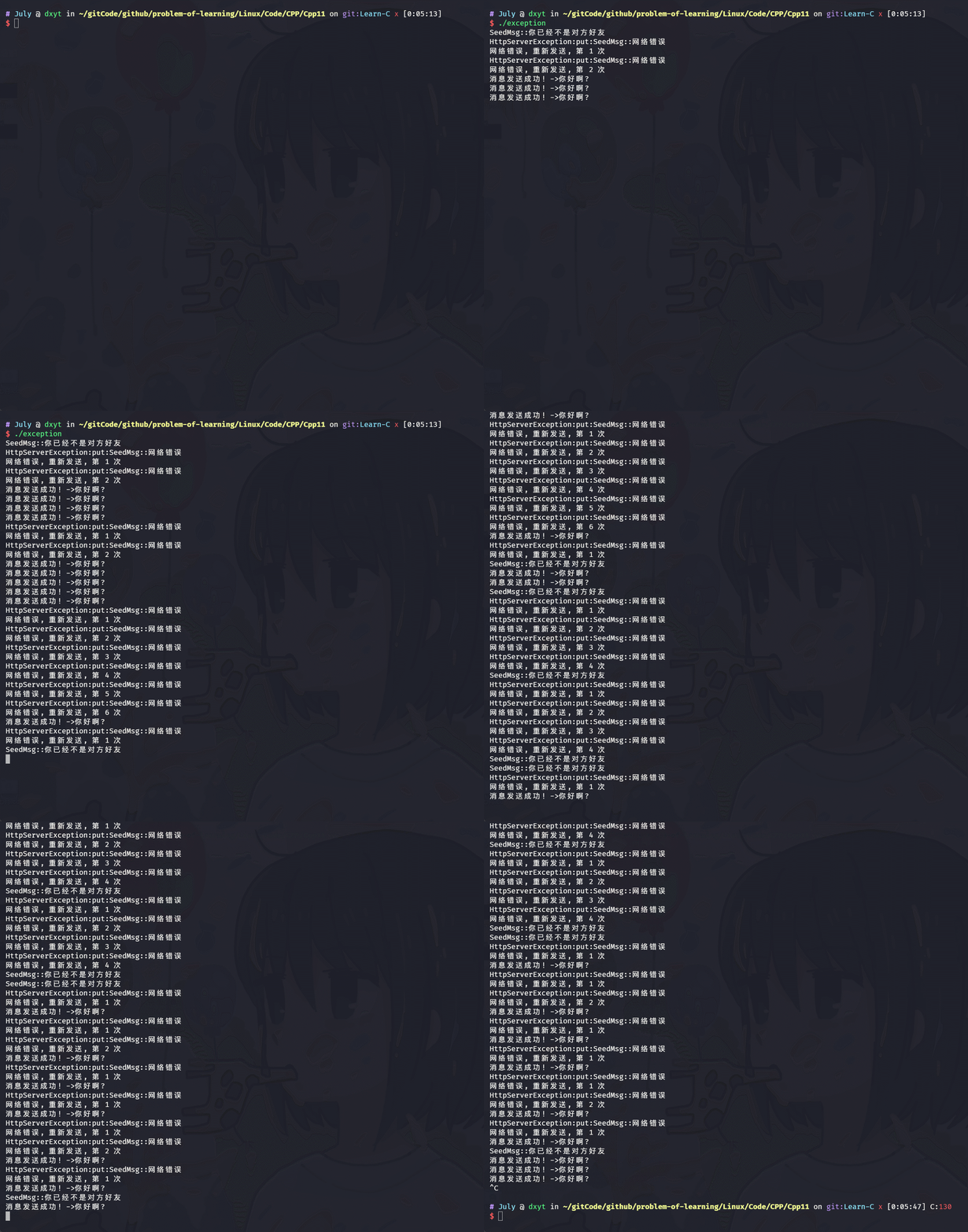
这里的关键点就是, 异常的重新抛出, 还有 SeedMsg()之后的break
由于需要特定的处理_id为105的异常, 所以需要先 就近catch 一下, 然后判断异常代码, 进行处理
而, 由于只处理105异常, 其他异常就需要再次抛出, 让其他地方处理
然后, SeedMsg()之后的break:
SeedMsg()正常返回, 就一定会顺着向下走, 也表示这发送成功, 就不需要继续for循环, 所以直接break
如果抛异常, 则会跳过break, 然后异常被下面的catch子句捕获